
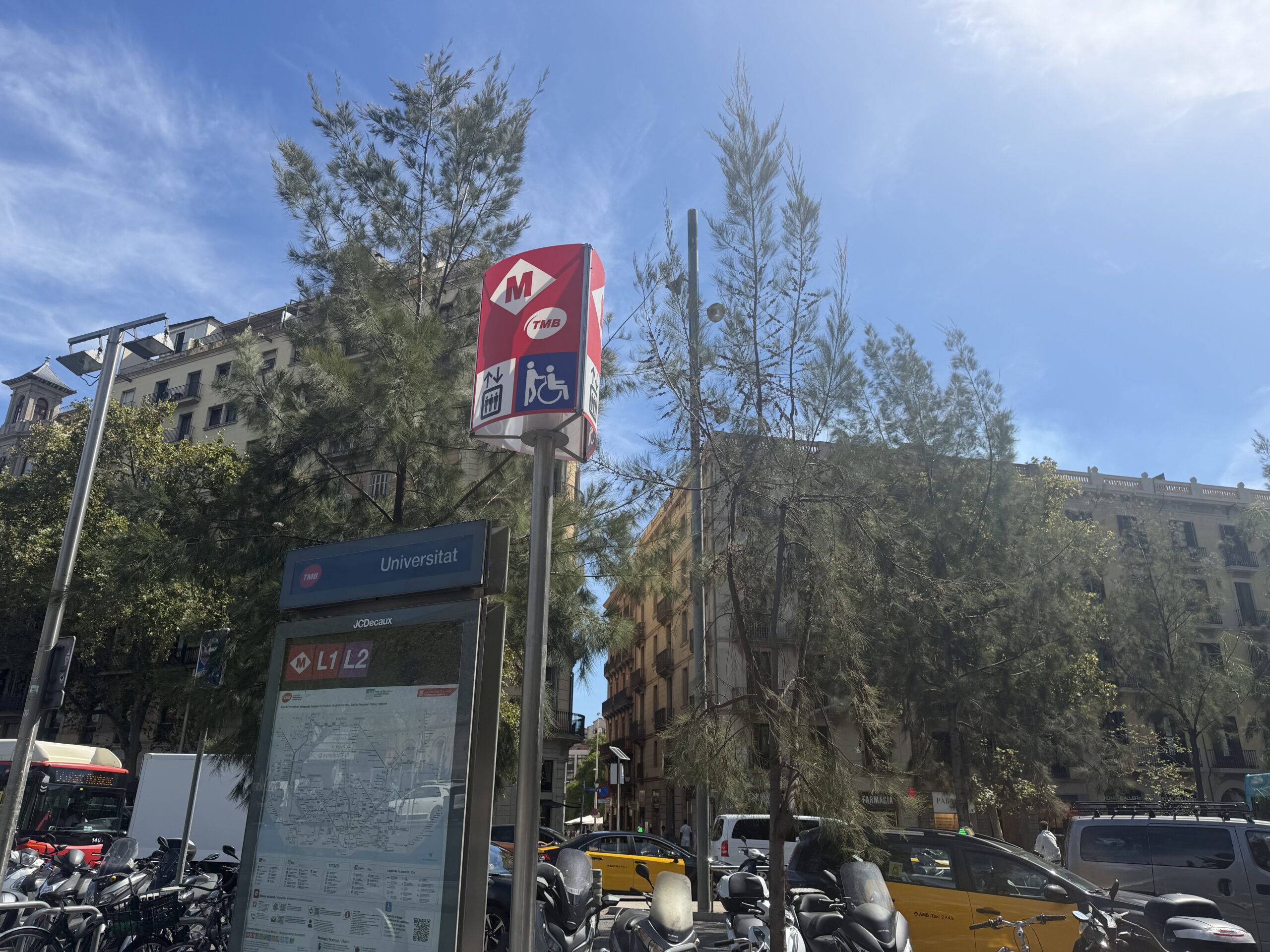

Barcelona’s public transport network is dense, affordable, and genuinely usable without a car — the kind of system most people moving from car-dependent places don’t quite believe until they’ve lived with it for a month. This covers what actually gets you around: the Metro, buses, trams, trains, tickets, apps, and the bikes and scooters that fill in the rest.
How Public Transport in Barcelona Fits Together
Barcelona’s transit network is made up of several systems that overlap enough that you’re rarely more than a short walk from a stop:
- Metro – fast, frequent, citywide
- TMB buses – fill in the gaps between metro stops
- Nitbus – the Barcelona night bus network, running after the Metro closes
- Trams – Trambaix and Trambesòs, serving outer districts
- Rodalies & AVE trains – regional and high-speed rail out of the city
- Bicing and rental bikes/scooters – for the trips too short to bother with any of the above
- Taxis & rideshares – Uber, Cabify, and traditional taxis
All of it (Metro, bus, tram, and regional rail) runs on one integrated fare system, which is the part most people find confusing at first and is worth understanding before you buy your first ticket.
The Metro: Barcelona’s Backbone

The Barcelona Metro is the fastest way to reach almost anywhere in the city, and for anyone used to spottier transit back home, it’s often the biggest quality-of-life shift after moving here.
For the full breakdown — all 12 lines, tickets, zones, hours, the TMB app, and even the rules for traveling with a dog — see our dedicated Barcelona Metro guide. This overview sticks to how the Metro fits alongside everything else.
Buses: TMB and the Night Bus Network

TMB buses cover more than 100 daytime routes across every neighborhood, and the Nitbus network runs 19 night lines after the Metro shuts down.
Buses fill in exactly where the Metro doesn’t reach, and they’re especially useful for cross-town routes that would otherwise require multiple metro transfers. Board at the front and tap your card or ticket as you get on — it’s validated the same way regardless of which ticket you’re using. The Nitbus network is a genuine lifeline for anyone out late, since the Metro doesn’t run 24 hours on weeknights.
Trams: Trambaix and Trambesòs
Barcelona’s tram network, made up of the Trambaix (T1–T6) and Trambesòs (T4–T6) lines, mainly serves the outer districts on both sides of the city.
If you’re living further from the center, the trams are worth knowing about even if you don’t use them daily — a smooth way to connect outer neighborhoods to the rest of the network without a car.
Barcelona Public Transport Tickets and Zones

One ticket generally covers your whole trip, no matter how many modes you use to get there. Barcelona’s Metro, buses, trams, and regional trains all run on a single integrated fare system, so the same T-Casual, T-usual, or single ticket that gets you on the Metro also covers TMB buses, the trams, and up to three transfers between them within your ticket’s time and zone limits.
Which specific ticket to buy, how the seven fare zones work, and the resident discounts most people never hear about (including a completely free option for kids) are covered in full in our Barcelona Metro guide — the ticket system is shared across all of public transport, so that breakdown applies here too.
Best Apps for Public Transport in Barcelona
The TMB App is the one to start with: it handles route planning, real-time arrivals, and buying or storing your T-mobilitat tickets digitally, so you’re not relying on paper cards or station machines every time. Google Maps is a reliable backup for door-to-door directions across every mode listed here, including walking segments the transit apps don’t always account for well. Between the two, you’ve got both a live public transport map and real-time planning covered.
Getting To and From Barcelona Airport

You have five real options — Metro, train, a dedicated Aerobús shuttle, a regular city bus, or a taxi — and which one’s best depends on your terminal, the time you land, and how much luggage you’re carrying more than it depends on price alone.
The short version: the Aerobús runs 24/7 and is the most reliable regardless of timing, the Metro and Bus 46 are the cheapest, and the train only serves Terminal 2 directly. Our full airport transport guide breaks down all five options with current prices, including where Uber currently stands.
Taxis and Rideshares

Taxis, Uber, and Cabify are all readily available in Barcelona, though prices have been creeping up in recent years.
For late nights, heavy luggage, or when public transit isn’t convenient, taxis and rideshares are an easy backup. They’re generally reasonable compared to U.S. prices, but costs have risen enough recently that they’re best used as a supplement to public transport, not a primary way of getting around.
Leaving the City: Rodalies and AVE Trains

Barcelona Sants station connects the city to the rest of Catalonia and Spain via the Rodalies regional rail network and high-speed AVE trains.
This is where Barcelona shines for anyone who likes to travel. A day trip to Montserrat, Sitges, or Tarragona is genuinely easy; a weekend in the Pyrenees is just as doable. The freedom that comes with a real regional rail system is hard to overstate, especially coming from a country where a car is basically required just to leave town for the weekend.
Bikes and Scooters: Bicing and Rental Options

Barcelona’s official bike-share system, Bicing, is the cheapest way onto two wheels if you’re a resident with a DNI or NIE — private operators like Donkey Republic and Lime fill the gap if you’re not, at a higher per-ride cost. Both work through an app, and both get you into the city’s growing bike lane network.
For exact Bicing pricing and signup, see our Bicing guide; for the private rental comparison, bike lanes, and cycling rules, see our bike and scooter sharing guide.
You Often Don’t Need Transit at All
Barcelona is extremely walkable, and daily errands like groceries, pharmacy runs, and coffee are usually within a short walk of home.
This gets overlooked, but it might be the best part of living here. The city is dense, and daily life is designed to happen close to home — within a short walk of almost any apartment, you’ll typically find a pharmacy, bakery, supermarket, fruit shop, café, and bar. You end up planning around your neighborhood, not around a car or a transit schedule.
What to Know Before You Rely on Transit
A handful of trade-offs are worth planning around before you settle into a routine.
- The Metro doesn’t run 24 hours. It closes earlier on regular weeknights, though it runs all night on Fridays, Saturdays, and before holidays. Nitbus covers the gap, but it’s slower.
- Validate every ticket, every time. Fines for unvalidated tickets are real and enforced, even if you technically have a valid pass in your pocket.
- Watch your belongings on the busiest lines. Pickpocketing is a real issue around high-traffic tourist stops like Sagrada Família and Liceu — keep bags zipped and in front of you on crowded trains.
- Plan ahead if you’re traveling with luggage. Not every station has a working elevator, and hauling bags up a packed escalator or staircase is worth avoiding if you can check the route beforehand.
- Rideshare prices have been rising. Uber and Cabify are still cheaper than in many U.S. cities, but no longer the reliable budget option they once were, especially during peak hours or bad weather.
FAQ
What’s the difference between the Metro, bus, and tram in Barcelona?
The Metro is fastest for most citywide trips, buses cover the gaps between Metro stops and run more routes overall, and trams mainly serve the outer districts on either side of the city. All three run on the same ticket, so the real choice is about speed and coverage, not cost.
Do I need different tickets for the bus, tram, and train in Barcelona?
No. Barcelona’s Metro, buses, trams, and regional trains run on one integrated fare system — the same T-Casual, T-usual, or single ticket works across all of them, with up to three free transfers within your ticket’s time and zone limits.
How do I get from Barcelona airport on public transport?
Five real options: Metro, train, the Aerobús shuttle, a regular city bus (Bus 46), or a taxi. The Aerobús is most reliable at any hour, the Metro and Bus 46 are cheapest, and the train only serves Terminal 2 directly — see our full airport transport guide for the complete comparison.
Does public transport run at night in Barcelona?
Yes, though not every mode runs 24 hours. The Metro runs late on weeknights and all night on Fridays, Saturdays, and before public holidays; the Nitbus night bus network covers the rest of the week after the Metro closes.
Is public transport free for kids in Barcelona?
Fare policies for children vary by age and ticket type and are updated periodically, so check current rules on TMB’s official fares page before assuming a specific age cutoff — this is one detail worth confirming fresh rather than relying on older articles.
Should I use Bicing or public transport in Barcelona?
They’re complementary, not competing — Bicing and rental bikes cover short hops and the last leg of a longer trip, while the Metro, buses, and trains cover everything else. Most residents end up using both depending on the specific trip.
Getting Around Is the Easy Part Once the System Clicks
Once you know which ticket is actually yours and which app to open, Barcelona’s transit system stops being a puzzle and just becomes how you get around. The Metro and buses cover the daily grind, the trains cover your weekends away, and Bicing or a rental scooter covers everything in between.
For the depth on any single piece of this — the Metro, Bicing, or private bike and scooter rentals — each has its own full guide. If you’re still working out the rest of what comes with living here, Penya connects you with people who’ve already figured out their own commute, their own paperwork, and everything else that comes after you’ve got your transit card sorted.
Do you own a car? Read this article to learn more about driving in Barcelona — which countries can exchange their license without a test, and which rules are actually national versus Barcelona-specific.
Leave a Reply