
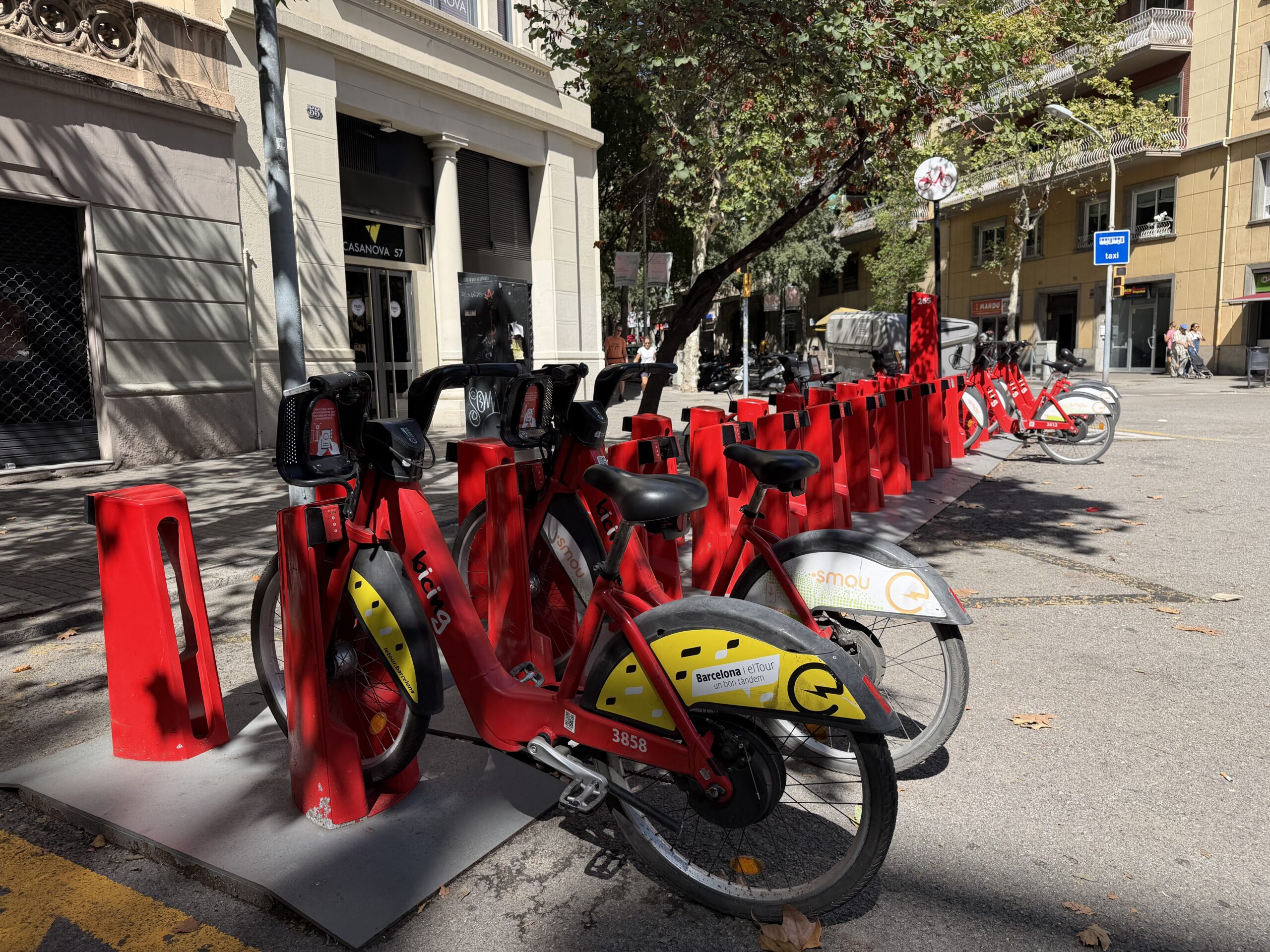

There are many ways to get around Barcelona and, while Bicing requires a NIE number, there are many more ways to get around on two wheels. This covers the private rental alternatives to Bicing worth knowing about, the bike lane network, and the rules that keep you out of trouble on the road.
What Is Bicing, Briefly

Bicing is Barcelona’s city-run, subscription-based bike-share system, restricted to residents with a valid DNI or NIE. It’s the cheapest option if you’re staying long-term, but there are other options if you haven’t yet gotten your residency or if you aren’t a fan of biking. For the full breakdown of pricing, signup, and how the Smou app behind it actually works, see our dedicated Bicing guide; this article focuses on everything around it.
Bike Rental Companies in Barcelona (For Now)
Donkey Republic and Lime both currently operate dockless e-bikes across Barcelona, and neither requires the residency documentation Bicing does.
Both work the same basic way: open the app, find a nearby bike on the map, unlock it with your phone, ride, and park it at a designated drop-off zone shown in the app when you’re done. Pricing is flexible: pay per ride, per day, or through a membership, rather than Bicing’s flat annual-fee model. These options give you the flexibility to ride occasionally without committing to a yearly subscription, whether you are still waiting on your NIE, prefer not to cycle regularly, or just want the occasional ride without registering for an annual plan. Exact rates vary and are set per city, so check the current prices in the Donkey Republic or Lime app before your first ride.
Know before you rely on this: Barcelona’s city council announced in June 2026 that it will not renew the operating licenses of any of the seven companies currently running shared bikes in the city: Donkey Republic, Lime, Bird, Voi, Bolt, RideMovi, and Cooltra. Those licenses expire December 31, 2026, and starting January 1, 2027, none of these companies can legally operate their bike fleets in Barcelona. The city’s stated reason is parking enforcement: the operators collectively racked up thousands of fines for badly parked bikes, and the council wants to expand Bicing’s public network instead. As of late 2026, the ban remains in place despite lobbying from the operators for a reversal. If you are reading this close to or after that date, check the latest updates to confirm availability.
Bicing vs. Donkey Republic vs. Lime: Which Should You Use?
Choose based on how often you’ll ride and how long you’re staying, not just price.
| Bicing | Donkey Republic / Lime | |
|---|---|---|
| Who it’s for | Residents with a DNI/NIE | Anyone, no residency required |
| Cost model | Annual fee (€35–€65) + per-use | Pay per ride, day, or subscription |
| Best for | Daily commuting, short trips | People without NIEs, occasional riders, those who prefer flexibility over an annual subscription |
| Availability | Long-term, city-backed | Uncertain past December 31, 2026 |
| Bike type | Mechanical and electric | Primarily electric |
If you’re settling into Barcelona long-term, Bicing is the better investment: it’s cheaper per ride once you’re subscribed, and it’s not tied to a private operator’s license status. If you are not yet set up with a NIE or simply prefer the occasional ride without committing to a subscription, Donkey Republic or Lime cover that gap for now, or buying a bike outright is worth considering for longer-term flexibility.
Barcelona’s Bike Lanes
Barcelona has an extensive, growing bike lane network, and using it isn’t optional when one exists on your route: Spain’s general traffic rules require cyclists to use a bike lane where one is available, rather than riding on the adjacent road.
The Eixample’s superblocks program has added protected lanes through many of its residential interior streets, Barceloneta and the waterfront have a continuous seafront route, and coverage keeps expanding across other districts. The city publishes an official map of the full lane network, worth bookmarking if you’re planning regular routes rather than relying on memory or guesswork.
Some of the city’s most-used cycling routes run along major central arteries: Carrer del Consell de Cent has been converted into a mixed-use street that prioritizes cyclists and pedestrians over cars, and Avinguda Diagonal has a dedicated cycling path running along its central median. Coverage continues to expand across all districts.
Where there is no dedicated lane, you are generally expected to ride with traffic on lower-speed streets known as zona 30 streets (residential roads with a 30 km/h speed limit, designed for shared use by cyclists and vehicles), staying to the right like any other vehicle.
Cycling Rules and Fines in Barcelona
Bicycles are legally treated as vehicles in Spain, which means cyclists are subject to the same general road rules as cars and motorcycles, layered with Barcelona’s own municipal traffic ordinance.
The rule most people ask about directly: riding on the pavement (sidewalk) is not allowed, and it has been actively enforced under Barcelona’s traffic by-law since February 2025. The fine is currently €500 for cycling or riding a personal mobility vehicle on the sidewalk. Fines across the by-law range from €50 to €500 depending on the severity of the violation.
A few other things worth knowing:
- Helmets are recommended, not mandatory, for regular cyclists riding in the city — Bicing itself advises wearing one for safety without requiring it as a condition of use.
- Don’t ride with a passenger. It’s unsafe, and on Bicing specifically, your insurance coverage only applies to the account holder, not anyone riding along.
- Confirm your bike is properly returned at the end of every ride, whether that’s tapping your card at a station kiosk or checking the app — this is your proof the rental period has ended.
- Be visible at night. Reflective clothing and functioning lights aren’t just good advice; they’re the standard expectation for riding safely after dark.
Electric scooters (patinetes) are a separate legal category from bicycles in Spain and are covered in their own section below.
Electric Scooters in Barcelona
Despite the title of this article, there are no free-floating app-based scooter services currently operating in Barcelona. Apps like Lime and Voi do not run shared scooter fleets in the city, the result of a deliberate policy stance by the Ajuntament that has kept the on-demand scooter model out since around 2017. If you want to ride a scooter in Barcelona, your options are owning one yourself or renting from a licensed shop (typically from around €7 per hour).
For residents who use personal electric scooters, the rules differ from bikes in important ways and are generally stricter:
- Helmets are mandatory. Under the traffic by-law in force since February 2025, helmet use is required for all electric scooter riders. This is the main practical difference from bikes, where helmets are recommended but not legally required.
- Speed limits apply. Maximum 25 km/h on bike lanes and roads, dropping to 10 km/h on shared pedestrian-priority paths.
- No sidewalk riding. Same rule as bikes, same €500 fine.
- Bike lanes are your primary route. Use them where they exist. On streets without one, stick to roads with a 30 km/h or lower limit.
- One rider only. No passengers.
- Minimum age is 16.
The short version: if you are already used to Barcelona’s cycling rules, scooters are largely the same framework, except the helmet is no longer optional and the speed limits are more precisely defined.
Social Norms: Sharing the Road
Ride predictably, signal your intentions, and treat the bike lane as your primary lane whenever one exists; that’s most of what “good cycling etiquette” in Barcelona comes down to.
A few specifics that make a real difference:
- Stay right within the bike lane unless you’re overtaking, the same convention as a road lane, so faster riders can pass without a standoff.
- Signal turns with your arm well before you make them, especially at intersections where cars are turning across the bike lane.
- When sharing a street with cars (common on zona 30 streets without a dedicated lane), ride in a straight, predictable line rather than weaving between parked cars; drivers are watching for consistent movement, not surprises.
- On shared pedestrian-priority streets, pedestrians have the right of way, genuinely, not just on paper — slow down rather than expecting people to clear a path.
- Don’t block drop-off zones or building entrances when parking a rental bike; it’s a common source of complaints against rental operators and part of why the shared-bike license situation escalated in the first place.
FAQ
What is the difference between Bicing and Donkey Republic in Barcelona?
Bicing is a city-run, residency-restricted subscription service. Donkey Republic is a private company offering dockless e-bike rentals with no residency requirement, priced per ride, day, or membership rather than an annual fee. Donkey Republic’s Barcelona operating license is set to expire December 31, 2026, per a city council decision announced in June 2026.
Will Donkey Republic and Lime still operate in Barcelona after 2026?
Not legally, based on the current decision. Barcelona’s city council announced in June 2026 that it won’t renew the operating licenses of any of the seven private shared-bike companies, including Donkey Republic and Lime, and those licenses expire December 31, 2026. If you’re reading this after that date, check current availability before assuming either service is still running.
Does Barcelona have bike lanes?
Yes, an extensive and growing network, particularly dense in the Eixample and along the waterfront. Cyclists are generally required to use a bike lane on their route where one exists, rather than riding on the adjacent road.
What are the cycling rules in Barcelona?
Bicycles are treated as vehicles under Spanish traffic law. Riding on the pavement is prohibited, cyclists must use a bike lane where one exists, and helmets are recommended but not legally required for regular cycling in the city.
Is there a fine for riding a bike on the sidewalk in Barcelona?
Yes, and it’s actively enforced, not just a rule on paper. The exact amount depends on the specific offense and can change over time, so treat any figure you see quoted online as a rough guide and check current amounts through the Guàrdia Urbana or the Ajuntament’s site if it matters to you.
Is Barcelona bike friendly?
Yes, relative to most major cities. An expanding bike lane network, a well-run public bike-share system, and streets increasingly designed around lower car speeds all support cycling as a genuine daily transport option, not just a leisure activity.
Are there shared electric scooters in Barcelona?
No. Unlike many European cities, Barcelona does not have free-floating app-based scooter services. Apps like Lime and Voi do not operate scooter fleets here. Personal electric scooters can be rented from licensed shops, typically from around €7 per hour.
What are the rules for electric scooters in Barcelona?
Helmets are mandatory for scooter riders (unlike bikes, where they are recommended but not required). Scooters must use bike lanes where available, with a maximum speed of 25 km/h on roads and lanes and 10 km/h on shared pedestrian paths. Riding on sidewalks is prohibited and carries a €500 fine. Minimum rider age is 16, and passengers are not allowed.
Getting on Two Wheels in Barcelona
Bicing is the durable option if you are building a life here: cheap once you are subscribed, city-backed, and not tied to a private company’s shifting license status. Donkey Republic and Lime fill the gap for now if you prefer flexibility or do not yet have your NIE, and the bike lanes and road rules apply no matter which one gets you moving. If you are on a personal electric scooter instead, the same lane network applies, with stricter rules on helmets and speed.
If Bicing sounds like the better long-term fit, our full Bicing guide covers exact pricing, signup through the Smou app, and how to activate your card. And if you’re figuring out the rest of how to get around the city, our public transport guide covers the Metro, buses, and how tickets and zones work — useful for the days two wheels isn’t the right call.
If you’re navigating this stretch of Barcelona life more broadly, Penya connects you with people who’ve already sorted out their own commute, paperwork, and everything else that comes after you’ve picked a way to get around.
Leave a Reply