

Introduction
Summer in Barcelona is everything the photos promise, but nothing can capture how hot it actually gets. The apartments in Eixample and the Gothic Quarter trap heat. The sea breeze gets blocked by the city’s taller buildings before it reaches you. And most buildings weren’t designed with central air conditioning in mind.
What actually works is a combination of timing, wardrobe, and knowing which parts of the city to lean into when the temperature peaks. Here’s what residents do.
Work With the Day’s Rhythm, Not Against It
The most effective way to stay cool in Barcelona is to stop fighting the heat schedule and start following it.
The hottest window is reliably 2–5pm, which is exactly when most local shops close and the streets empty out. Use this window to stay indoors: have a long lunch, rest, work from home with the shutters closed. Going out between 2 and 5 in July or August is when the heat becomes unbearable.
This also means that mornings are extremely pleasant until about 10am, and evenings come alive after 8pm when temperatures drop and the whole city emerges. Plan errands, walks, outdoor workouts, and social plans around these two windows. This simple shift will make the summer noticeably more livable.
Embrace Fan Culture, and Invest in a Good One
In Barcelona, a hand fan (abanico) is a practical daily tool, not a souvenir, locals carry them without irony, and you should too.
A quality abanico runs €5–20 and fits in any bag; El Corte Inglés and most local markets carry them. If you prefer something more portable, small rechargeable electric fans are widely available on Amazon Spain and in bazaars around the city for under €10. They’re especially useful on the metro, which can feel significantly hotter than street level on peak summer afternoons.
Penya Tip: The Mercat de Sant Antoni and Encants flea market both have stalls selling decorative fans at reasonable prices, worth picking up one that actually looks good.
Dress for Mediterranean Heat
Linen is the best wardrobe upgrade you can make for Barcelona summer.
Loose, light-colored linen or cotton breathes in a way synthetic fabrics simply don’t. Avoid dark colors, anything tight-fitting, and structured pieces with lining, instead opt for some flowy trousers, loose shirts, midi skirts, and sandals. You can find good linen basics at Zara, Mango, and COS on Passeig de Gràcia, or at local boutiques in Gràcia and El Born for something less mass-market.
Comfortable, breathable shoes matter more than most people realize, Barcelona involves a lot of walking!
Know Which Neighborhoods Stay Coolest
Not all of Barcelona runs at the same temperature, and knowing which areas stay cooler is genuinely useful on a 35°C day.
Sarrià-Sant Gervasi, the upper residential neighborhood climbing toward the Collserola hills, benefits from elevation and tree cover, it regularly runs 3–5°C cooler than the city center on the same day. Gràcia, with its shaded plazas and narrower streets, holds cool air better than the wide Eixample boulevards. The Barri Gòtic’s labyrinthine alleys stay in shadow for much of the day.
Counterintuitively, the waterfront and Barceloneta can feel windless and intense during a heat wave despite being next to the sea. If you’re moving around the city on a very hot day, heading uphill is often more comfortable than heading toward the water.
Find the Right Beach (Most Residents Don’t Go to Barceloneta)
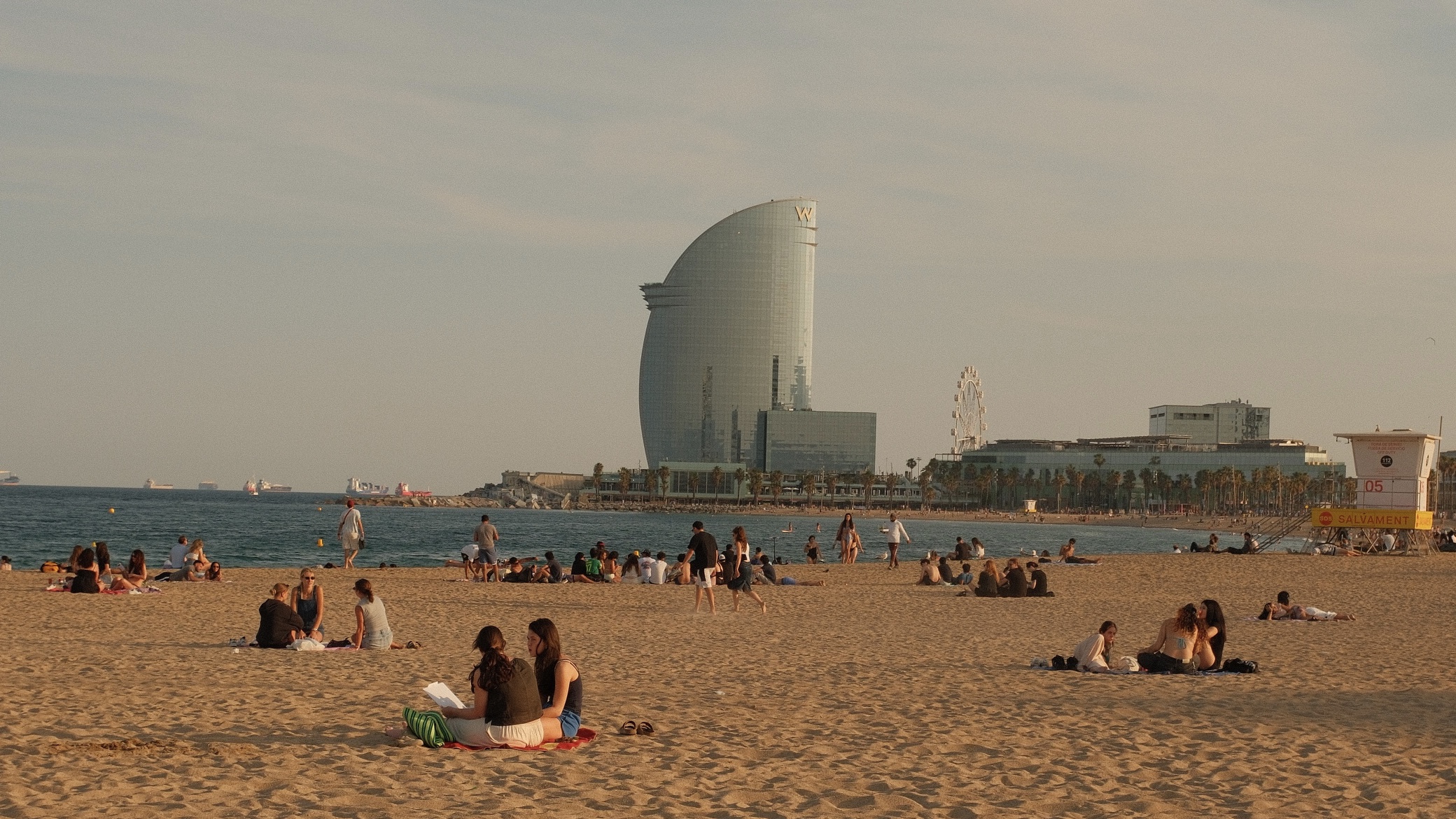
Barceloneta is the most accessible beach but the least pleasant once you actually live here, the crowds, the noise, and the vendors make it feel more like an event than a swim.
Within the city:
- Bogatell – A 10–15 minute metro ride from the center (Llacuna or Poblenou stops), Bogatell has better sand, more space, and a noticeably calmer atmosphere. This is where a lot of Barcelona residents actually go.
- Mar Bella – Right next to Bogatell, with a quieter local crowd. Has a clothing-optional section at one end.
- Nova Icaria – Between Barceloneta and Bogatell, calmer than Barceloneta with good facilities and family-friendly.
- Sitges – 35–40 minutes from Passeig de Gràcia or Sants by Rodalies train. A beautiful beach town: cleaner beaches, good restaurants, and a very relaxed pace. The last train back runs late, so it works as a full afternoon out. This is the go-to for Barcelona residents wanting a proper beach day.
- Garraf – Even closer than Sitges, smaller, more local. Worth it if you want something quick.
- Ocata (El Masnou) – North of Barcelona by Rodalies, a wide and quiet beach with a different crowd entirely.
Pools: The Piscina Municipal de Montjuïc (the old Olympic diving pool) is open to the public in summer for a small entrance fee and has some of the best views in the city. Can Dragó sports complex in Sant Andreu also has a public pool that’s significantly cheaper than hotel options.
Cool Down With Barcelona’s Best Cold Treats
Barcelona takes cold treats seriously, and knowing what to order is part of summer here. A few things worth trying:
Horchata (orxata in Catalan) is a cold, subtly sweet drink made from tiger nuts. It’s distinctly Valencian and Catalan in origin, widely available in summer at traditional granjerias, and very refreshing. If you haven’t tried it yet, summer is the right time.
Granizado (crushed ice drink, usually lemon or coffee) is available at most traditional cafes and is (in our opinion) one of the more underrated summer orders. Order a granizado de limón on a hot afternoon and you’ll understand why it’s been around for centuries.
Gelato is everywhere in Barcelona but quality varies significantly by neighborhood. Penya has curated recommendations by area, worth checking before you default to the nearest tourist-adjacent spot.
Acai, smoothie bowls, and cold-pressed juice bars have become a fixture in Born, Eixample, and Gràcia, especially near the markets. Good for a mid-afternoon reset.
Find cold treat recommendations near you on Penya →
Use the City’s Air-Conditioned Escapes
When the apartment is hot and you need to be somewhere that isn’t, Barcelona has excellent options most people don’t think of.
Shopping centers are underrated for this: El Corte Inglés on Plaça de Catalunya, Las Arenas (the old bullring on Plaça d’Espanya), and Diagonal Mar are all reliably cold. You don’t need to buy anything, a coffee in El Corte Inglés’ basement café works.
Museums are the better version of this: MACBA, MNAC at Montjuïc, the Museu Picasso, and the Fundació Joan Miró all have solid air conditioning, and are worth the visit either way. Summer is actually a good season for museums since the outdoor crowds push most tourists to the beach.
Libraries are free and often overlooked: the Biblioteques de Barcelona system is reliably cool, has wifi, and is open to residents. The Gabriel García Márquez Library in Poblenou is the standout, named “Best Public Library in the World,” it’s also one of the most pleasant places to work in summer. Most branches work well for a few hours of focused time.
Cool Your Apartment Without Central AC
Most Barcelona apartments (especially in the classic Eixample blocks) don’t have central air conditioning, and the ones that do were usually retrofitted. But the building physics work in your favor once you know how.
During the day: keep windows, shutters, and blinds fully closed. The persianas, the roll-down exterior blinds common on Barcelona apartments, are specifically designed for this. Pull them all the way down by mid-morning. The goal is to stop heat from entering, not to circulate air.
After sunset: open everything. Mediterranean evenings cool quickly, and cross-ventilation between front and back windows creates a through-draft that can drop an apartment several degrees in under an hour. A fan directed at a window accelerates this significantly.
A tray of ice in front of a fan is an old trick, it works for a few hours and is surprisingly effective when you need to sleep.
If you’re apartment hunting or renewing a lease, AC availability is worth factoring in specifically. It commands a premium in summer months, but the difference in daily comfort is significant.
Conclusion
Barcelona summers are intense but entirely livable, once you stop operating on Northern European rhythms and start working with the city’s natural schedule. Earlier mornings, later evenings, the right neighborhood, and a good fan will take you further than you’d expect.
For cold treat spots, shaded terraces, and the best neighborhood recommendations near you, explore Barcelona on Penya.
Frequently Asked Questions
How hot does Barcelona get in summer?
Barcelona’s peak summer months (July and August) regularly hit 30–35°C, with occasional heat waves pushing above 38°C. Humidity is moderate compared to tropical climates but enough to make it feel heavier than a dry heat at the same temperature. Evenings typically cool to 22–24°C, one of the reasons Barcelona’s social life peaks after 9pm in summer.
Do apartments in Barcelona have air conditioning?
Most traditional Barcelona apartments, particularly in older Eixample blocks, do not have central air conditioning. Some have portable or split-system AC units added by landlords. If cooling is a priority, check for this specifically when apartment hunting; it’s increasingly listed as an amenity and commands a summer rent premium. In the meantime, proper use of persianas (exterior shutters) and cross-ventilation makes a significant difference.
What is the best beach near Barcelona for residents?
Bogatell is the most popular choice among Barcelona residents, less crowded than Barceloneta, better sand, easily reachable by metro. For a day trip, Sitges (35–40 minutes by train from Passeig de Gràcia) is the go-to: more relaxed, genuinely beautiful, and worth the travel time.
What is the coolest time of day in Barcelona in summer?
Early morning before 10am and evening after 8pm are the most comfortable outdoor windows. The hottest stretch is 2–5pm, which aligns with traditional siesta hours, when local shops close and the streets quiet down for a reason.
Is the sea breeze in Barcelona reliable for cooling down?
Less than people expect. The city’s taller buildings, particularly throughout Eixample, block much of the coastal breeze. Neighborhoods closer to the water (Poblenou, Barceloneta) and elevated areas (Sarrià, upper Gràcia) catch more of it. The least breezy areas on a hot day are often the central tourist zones.
What should I wear in Barcelona in summer?
Loose linen or lightweight cotton, in light colors. The local aesthetic tends toward relaxed and put-together rather than casual sportswear: flowy trousers, loose linen shirts, light midi skirts. Comfortable walking shoes are non-negotiable since Barcelona involves significantly more walking than most cities its size.
What is horchata and where can I get it in Barcelona?
Horchata (orxata in Catalan) is a cold, lightly sweet drink made from tiger nuts. It’s a traditional Valencian and Catalan summer drink, available at traditional granjerias and many cafes throughout Barcelona in summer. It’s one of the most genuinely refreshing things you can order on a hot day and worth trying if you haven’t.
Leave a Reply